If you’ve spent any time on social media, messaging apps, gaming platforms, or online communities, you’ve probably seen someone say, “PM me” or “Send me a PM.”
For many people, especially those new to online communication, this simple abbreviation can be confusing. Does it mean a time of day? Is it a business term? Or is it something completely different?
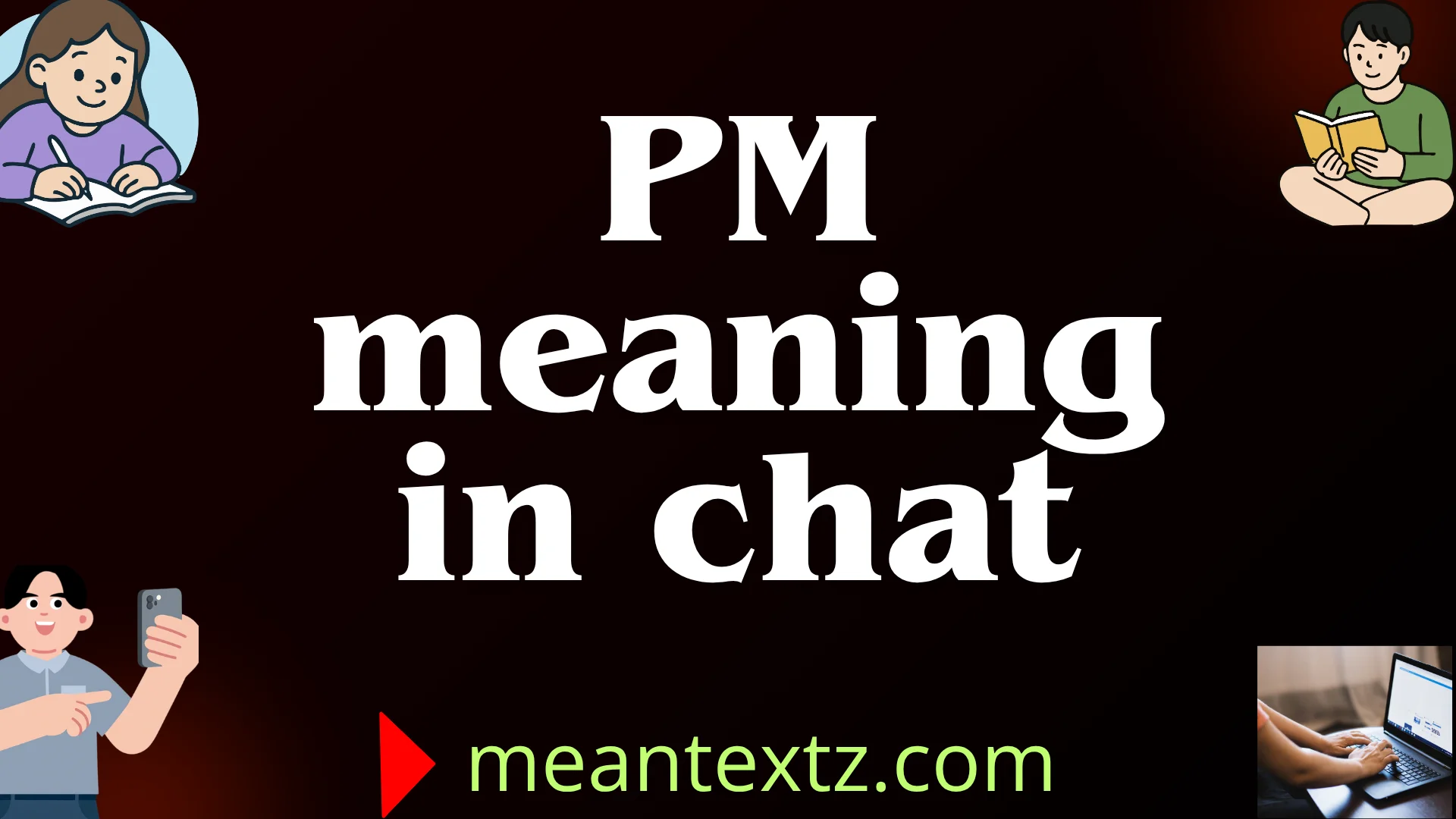
The truth is that PM meaning in chat usually refers to a private conversation between two people. It’s one of the most commonly used internet abbreviations and appears everywhere from WhatsApp groups to Instagram messages.
Understanding what PM means can help you communicate more effectively online, avoid misunderstandings, and know when someone wants to continue a conversation privately.
In this guide, you’ll learn the exact meaning of PM, where it came from, how people use it today, and how to respond naturally when someone sends you a PM or asks you to send one.
PM Meaning in Chat – Quick Meaning
PM stands for Private Message.
In online conversations, it means a message sent directly to one person rather than posted publicly where everyone can see it.
Simple Definition
PM = Private Message
People use it when they want to:
- Continue a conversation privately
- Share personal information
- Discuss sensitive topics
- Exchange contact details
- Avoid cluttering public discussions
Examples
“PM me the details.”
“I’ll send you a PM.”
“Check your PMs.”
In all of these examples, the person is referring to a private conversation rather than a public comment or group chat.
Origin & Background
The term PM became popular during the early days of internet forums, online communities, and chat rooms.
Before modern social media platforms existed, websites often included a feature called Private Messaging, allowing users to communicate directly with one another.
As online communication grew, people shortened “Private Message” to simply PM.
Over time, the abbreviation spread across:
- Internet forums
- Gaming communities
- Facebook groups
- Twitter/X
- Discord
- Telegram
Today, even platforms that officially use terms like “DM” (Direct Message) still have users who casually say PM.
The phrase has become part of everyday internet culture and remains widely understood around the world.
Real-Life Conversations
WhatsApp Group Chat
Person A: Does anyone know a good graphic designer?
Person B: Yes, I worked with one recently.
Person A: Can you share their contact?
Person B: Sure, I’ll PM you the number.
Instagram Comments
Person A: Where did you buy those shoes?
Person B: They’re from a local store.
Person A: What’s the name?
Person B: I’ll PM you the details.
TikTok Comments
Person A: How did you edit this video?
Person B: It takes a few steps.
Person A: Can you explain?
Person B: PM me and I’ll send the tutorial.
Text Message Example
Person A: I don’t want to discuss this in the group.
Person B: No problem. PM me when you’re free.
Emotional & Psychological Meaning
Although PM is a simple abbreviation, it often carries deeper social meaning.
When someone asks for a private message, they may be seeking:
Privacy
Some information isn’t meant for public discussion. People often move conversations to PMs when sharing personal details.
Trust
A private message can indicate a higher level of trust between two people.
Comfort
Many individuals feel more comfortable discussing sensitive topics privately rather than in front of a group.
Personal Connection
Moving from public comments to private messages often creates a more direct and personal interaction.
Efficiency
Long conversations can become easier to manage when moved into a private chat.
In modern digital communication, PMs often represent a balance between openness and personal boundaries.
Usage in Different Contexts
Social Media
On platforms like Instagram, Facebook, and Reddit, PM usually means a direct private conversation.
Example:
“PM me the link.”
Friends and Relationships
Friends often use PMs to discuss personal matters, make plans, or share private jokes.
Example:
“I’ll PM you after work.”
Gaming Communities
Gamers frequently use PMs to coordinate strategies, exchange usernames, or discuss matches.
Example:
“PM me your gamer tag.”
Professional Settings
In professional environments, PMs can be used to discuss confidential matters or move a conversation away from public channels.
Example:
“Please PM me your email address.”
Casual Tone
When used casually, PM feels friendly and informal.
Example:
“PM me when you’re online.”
Serious Tone
In more serious discussions, PM may indicate privacy and discretion.
Example:
“Let’s discuss the issue through PM.”
Common Misunderstandings
Many people misunderstand PM because it can have multiple meanings in different situations.
Mistake #1: Confusing PM With Time
PM can also mean “Post Meridiem,” referring to afternoon or evening time.
Example:
- Meeting at 3 PM = Time
- Send me a PM = Private Message
Context determines the meaning.
Mistake #2: Assuming It Means DM
Although PM and DM are similar, some platforms officially use “Direct Message” instead of “Private Message.”
Most people treat them as interchangeable.
Mistake #3: Thinking It’s Always Personal
Not every PM is deeply personal.
Sometimes people simply want to exchange information quickly and privately.
Mistake #4: Using It in Formal Documents
PM is internet slang and should generally be avoided in highly formal writing.
Comparison Table
| Term | Meaning | Usage |
|---|---|---|
| PM | Private Message | Private online conversation |
| DM | Direct Message | Direct messaging on social platforms |
| IM | Instant Message | Real-time messaging |
| Chat | General conversation | Public or private |
| Comment | Public response | Visible to others |
| Group Message | Message to multiple people | Shared discussion |
| Broadcast | One-way communication | Large audience |
| Public Post | Open content | Everyone can see |
Key Insight
While PM, DM, and IM are closely related, PM specifically emphasizes privacy, whereas DM focuses on direct communication.
Variations and Types of PM
1. PM Me
Requesting someone to send a private message.
2. Send a PM
Inviting private communication.
3. Check Your PM
Telling someone a message has already been sent.
4. PM Sent
Confirming that the private message was delivered.
5. PM Later
Suggesting a private conversation at another time.
6. Group PM
A private conversation involving several people.
7. Business PM
Private discussion about work or services.
8. Support PM
Private customer support communication.
9. Follow-Up PM
A message sent after an earlier discussion.
10. Friendly PM
A casual personal message between friends.
How to Respond When Someone Uses It
Casual Replies
- “Sure, I’ll send you a PM.”
- “No problem, check your inbox.”
- “I’ll message you now.”
Funny Replies
- “Entering stealth mode… PM incoming.”
- “Secret message loading.”
- “Mission accepted. PM on the way.”
Mature and Confident Replies
- “Certainly, I’ll reach out privately.”
- “Let’s continue this discussion in PM.”
- “I’ll send the details directly.”
Private and Respectful Replies
- “Thank you. I’ll message you privately.”
- “I’d be happy to discuss this through PM.”
- “Let’s keep the conversation confidential.”
Regional & Cultural Usage
Western Culture
In North America and Europe, PM is commonly used across social media, gaming platforms, and forums.
Many users switch between PM and DM without thinking much about the difference.
Asian Culture
PM is widely understood, especially among younger internet users.
Messaging apps often dominate communication, making private conversations a normal part of daily interaction.
Middle Eastern Culture
PM is frequently used in social networking, business communication, and online communities.
Private messaging is often valued when discussing personal matters or exchanging contact details.
Global Internet Usage
Across the internet, PM has become a nearly universal abbreviation.
Regardless of language or location, most online users recognize PM as a request for private communication.
FAQs
What does PM mean in chat?
PM stands for Private Message, meaning a direct conversation between two people that is not public.
Is PM the same as DM?
Almost. PM means Private Message, while DM means Direct Message. Most people use them interchangeably.
What does “PM me” mean?
It means “send me a private message.”
What does “PM sent” mean?
It means the person has already sent you a private message.
Is PM professional?
It can be used professionally in informal workplace chats, but formal communication often uses clearer wording.
Can PM mean something other than Private Message?
Yes. PM can also mean afternoon/evening time (Post Meridiem), Prime Minister, or Project Manager, depending on context.
Is PM still used today?
Yes. Despite the popularity of the term DM, millions of internet users still use PM every day.
Conclusion
Understanding the PM meaning in chat is simple once you know the context. In most online conversations, PM stands for Private Message, a way to communicate directly with someone outside a public discussion.
Whether you’re using WhatsApp, Instagram, TikTok, Facebook, gaming platforms, or professional communities, you’ll frequently see phrases like “PM me,” “Check your PMs,” or “PM sent.”
Beyond its literal definition, PM reflects something important about modern communication: the need for privacy, trust, and more personal conversations in a highly connected digital world.
The next time someone says “PM me,” you’ll know exactly what they mean—and how to respond naturally and confidently.
────────────────────────────────────────
Discover More Articles
What Does TMO Mean in Text? Complete Meaning, Examples, Uses, and Modern Slang Guide
What Does BB Mean in Text? Complete Meaning, Uses, Examples, and Modern Slang Guide
TMO Meaning: Complete Guide to Its Definition, Usage, Examples, and Social Media Context
What Does Of Mean? Understanding One of the Most Important Words in English

Admin of this site and an English language educator passionate about modern slang and digital communication.I simplify internet terms with clear, real-life explanations.Helping readers speak and understand online language with confidence.